

For clean water – today and in the future
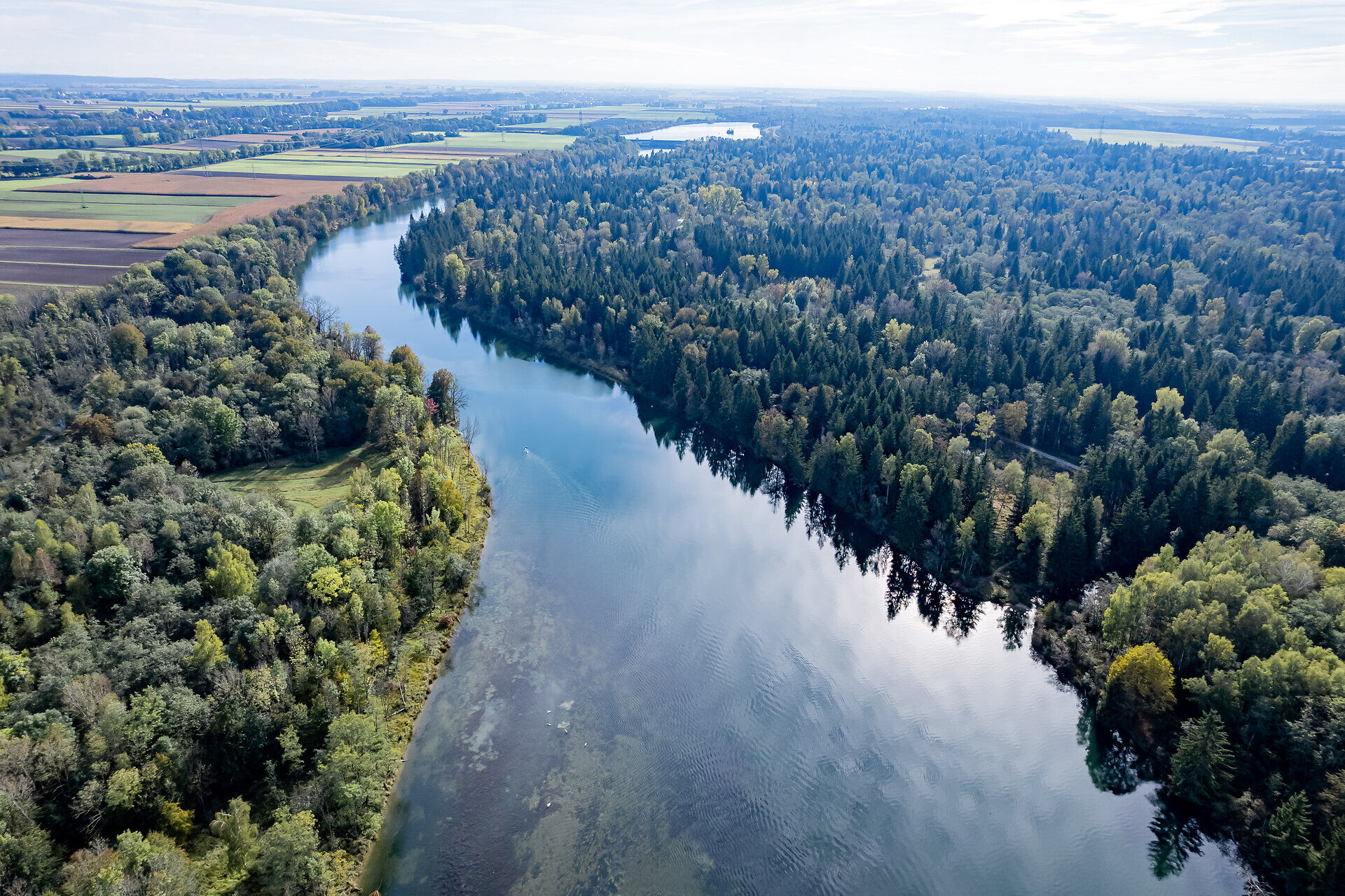
Rivers and lakes are not only popular destinations for people, but also provide a habitat for numerous animals and plants. Water is therefore one of our most valuable resources. To safeguard our livelihoods, efforts are being made in Aux to ensure that surface water and groundwater remain clean.
Water and nature conservation in Aux
With its numerous nature parks, landscape conservation areas and drinking water protection zones, there are many places in Aux where water needs to be protected. This also takes into account the local flora and fauna, as biodiversity and functioning ecosystems also contribute to water protection. Fundamentally, forests in Aux are of great importance as they must always be considered in conjunction with water. This is particularly because the forest filters rainwater and ensures clean water. Furthermore, our groundwater flows beneath the trees, which is why a large part of the Westliche Wälder Nature Park is also protected.
Fresh and natural drinking water
The drinking water for the residents of Aux comes, among other sources, from the municipal forest, which is why it is designated as a drinking water protection area. Numerous spring-fed streams with clear groundwater rise there, winding their way through a network of watercourses some 80 kilometres long – a true natural paradise that continues to provide clean drinking water to this day. Stadtwerke Augsburg (swa) and the Forestry Office are committed to ensuring clean waterways and pure groundwater. Since 1991, 54 farmers from Aux have also undertaken to adhere to specific crop rotations and fertiliser restrictions. Instead of farming the land intensively, flowers are planted, for example. This not only protects the groundwater in the soil but also creates a new habitat for insects and bees. This, in turn, has a positive impact on nitrate levels, and there are hardly any pharmaceutical residues in the water. In terms of quality, the drinking water in Aux is actually one of the best in Europe!
Back to nature
‘Only intact ecosystems are capable of filtering out pollutants that would otherwise end up in our drinking water. Biodiversity is a good indicator of an ecosystem’s health. High biodiversity ensures that the groundwater remains clean,’ explains Nicolas Liebig, Managing Director of the Augsburg Landscape Conservation Association. And that is precisely why there are quite a few water protection and restoration projects. This is because the two rivers – the Lech and the Wertach – were straightened more than 100 years ago, and the groundwater level has been falling ever since. A sad side effect of this is that nearby streams and springs are drying up, causing rare animals and plants to lose their habitats. In Aux, active measures are being taken to ensure that clean water continues to flow through Aux in the future.
Rivers and lakes are not only popular destinations for people, but also provide a habitat for numerous animals and plants. Water is therefore one of our most valuable resources. To safeguard our livelihoods, efforts are being made in Aux to ensure that surface water and groundwater remain clean.
Water and nature conservation in Aux
With its numerous nature parks, landscape conservation areas and drinking water protection zones, there are many places in Aux where water needs to be protected. This also takes into account the local flora and fauna, as biodiversity and functioning ecosystems also contribute to water protection. Fundamentally, forests in Aux are of great importance as they must always be considered in conjunction with water. This is particularly because the forest filters rainwater and ensures clean water. Furthermore, our groundwater flows beneath the trees, which is why a large part of the Westliche Wälder Nature Park is also protected.
Fresh and natural drinking water
The drinking water for the residents of Aux comes, among other sources, from the municipal forest, which is why it is designated as a drinking water protection area. Numerous spring-fed streams with clear groundwater rise there, winding their way through a network of watercourses some 80 kilometres long – a true natural paradise that continues to provide clean drinking water to this day. Stadtwerke Augsburg (swa) and the Forestry Office are committed to ensuring clean waterways and pure groundwater. Since 1991, 54 farmers from Aux have also undertaken to adhere to specific crop rotations and fertiliser restrictions. Instead of farming the land intensively, flowers are planted, for example. This not only protects the groundwater in the soil but also creates a new habitat for insects and bees. This, in turn, has a positive impact on nitrate levels, and there are hardly any pharmaceutical residues in the water. In terms of quality, the drinking water in Aux is actually one of the best in Europe!
Back to nature
‘Only intact ecosystems are capable of filtering out pollutants that would otherwise end up in our drinking water. Biodiversity is a good indicator of an ecosystem’s health. High biodiversity ensures that the groundwater remains clean,’ explains Nicolas Liebig, Managing Director of the Augsburg Landscape Conservation Association. And that is precisely why there are quite a few water protection and restoration projects. This is because the two rivers – the Lech and the Wertach – were straightened more than 100 years ago, and the groundwater level has been falling ever since. A sad side effect of this is that nearby streams and springs are drying up, causing rare animals and plants to lose their habitats. In Aux, active measures are being taken to ensure that clean water continues to flow through Aux in the future.
Augsburg’s World Heritage Site
Where the Lech and Wertach rivers converge, water has played a crucial role in the city’s development for centuries – both as a hub for industry and as a source of energy. Centuries ago, a unique canal system was established in Augsburg that continues to supply the city with industrial and drinking water to this day. Since 2019, this unique ensemble of engineering and culture has been a UNESCO World Heritage Site. The Augsburg Hochablass, a large weir on the Lech, is also part of this. It is a popular destination for day trips and marks the origins of modern water supply in Augsburg.
Bridges and fountains
Numerous canals wind their way through Augsburg like veins. You can hear the water rushing everywhere. A total of 530 bridges, large and small, span the city’s canals and streams. Fun fact: this means there are more bridges in Augsburg than in Venice!
As well as its unique water system, Augsburg also boasts numerous lakes and rivers. These contribute significantly to the quality of life and offer a wide range of recreational opportunities. The Kuhsee, situated in the Siebentischwald, is particularly popular with the locals. But even in the heart of the city, you can swim along the miles of gravel banks of the Wertach and Lech rivers.
Action that’s hard to put down
Are you sporty and looking for the ultimate challenge? Then why not give wakeboarding a go just outside the city at Friedberger Baggersee or Mandichosee near Merching? In spring and autumn, surfers and windsurfers can enjoy their hobbies here. And if you fancy it, you can try stand-up paddleboarding. Local sports clubs also offer a wide range of other leisure activities.
For those who prefer to watch, the white-water sports facility at the Eiskanal is ideal. The canoe slalom course was specially designed for the 1972 Olympic Games. Even today, World Cups and European Championships are held here regularly, where you can see canoeists in action.
Swimming lakes in the region
Kuhsee
The former cattle trough is now one of the region’s most popular attractions. Kiosks, a restaurant and barbecue areas cater for visitors’ needs, and there is also a boat hire service.
Mandichosee
There are sunbathing areas, a children’s playground with a Viking ship and volleyball courts. On the water, sailing enthusiasts, windsurfers and stand-up paddlers come together. Regattas and sailing competitions attract both competitors and spectators.
Stempflesee
To get away from the stress of everyday life and the noise of the city, a trip to the Siebentischwald is well worth it. Take a stroll along the Stempflesee or sit back and enjoy the natural surroundings on one of the park benches.
Auensee
Located west of Kissing, a third of Lake Auensee is a nature reserve. Swimming is permitted in the remaining area. It’s the perfect place to spend a relaxing summer’s day!
Weitmannsee
For anyone who dreams of the world’s sandy beaches, it offers a wonderful little getaway. Peaceful and unspoilt, Weitmannsee captivates visitors with its crystal-clear water and pleasant sandy beaches.
Autobahnsee
This is another great spot to spend a relaxing summer’s day. The water quality is excellent and a lifeguard station ensures the safety of bathers. There are also large sunbathing areas with barbecue facilities.
Rothsee
Located in the Augsburg district near Zusmarshausen, you can go for a swim here or have a barbecue by the lakeside. When the lake freezes over in winter, various winter sports are practised.
Ilsesee
Diving sessions take place here in spring and autumn. In summer, the lake, with its shallow shores and spacious sunbathing areas, offers swimming fun for the whole family. Volleyball courts and a playground by the lakeside make a day at the lake the perfect getaway for young and old alike.
Bergheimer Baggersee
Easily accessible by bike, the quarry pond is idyllically situated in the countryside. Perfect for a quick break and a chance to cool off.
Friedberger Baggersee
You’ll find it to the east of Augsburg city centre. The spacious sunbathing areas offer plenty of room, and for those who love a bit of action, there’s even a water-skiing facility and a diving centre. There are also volleyball courts, a restaurant with a lakeside terrace and a kiosk.
A cool refreshment in the canal
Do you prefer nature to an outdoor swimming pool? Then why not visit the Luftbad in the Göggingen district of Augsburg? Here you’ll find a swimming experience of a very special kind: a ladder takes you comfortably from the sunbathing lawn into the cool water. You can then let yourself drift with the gentle current down the canal to the exit point. There’s a rope to hold on to for a secure grip. If you’re feeling sporty, you can swim against the current. On the bank, bathers can play basketball or volleyball. The Hauptstadtbach Eiskanal on Friedberger Straße offers a very similar experience. Here, too, you can let yourself drift with the current and rest on the sunbathing lawn at the edge.
Augsburger Kahnfahrt – Restaurant and Boat Hire
The Augsburger Kahnfahrt is a traditional restaurant with a boat hire service in the Jakober Vorstadt district. Set in picturesque surroundings, you can hire a rowing boat here and take a trip on the moat in front of the old city walls at Oblatterwall. Afterwards, you can enjoy delicious seasonal dishes at the Kahnfahrt restaurant.
Swimming in Augsburg’s rivers
Swimming in rivers is permitted, whereas it is prohibited in Augsburg’s canals, with the exception of the designated swimming areas in the Proviantbach and Hauptstadtbach. On hot summer days, the Wertach offers a few spots where you can cool off. Between the Gögginger Bridge and Inningen, for example, there is a gravel bank in a somewhat secluded cove where you can linger and relax in summer. The gravel bank is easily accessible by bike, or you can park your car at the Gögginger Bridge and walk for about 10 minutes. Swimming is also generally permitted in the Lech. Between Gersthofen and Meitingen there are various gravel banks, which, however, also serve as habitats for animals and plants.
You are currently viewing a placeholder content from YouTube. To access the actual content, click the button below. Please note that doing so will share data with third-party providers.
More InformationWater sports and club life
Augsburg is world-renowned for canoeing. The artificial white-water sports facility at the Eiskanal in Augsburg’s Spickel district was designed specifically for white-water sports for the 1972 Olympic Games and has been thrilling athletes and spectators ever since. The canal is fed by the River Lech and forms part of the historic canal network; it is also the oldest man-made canoe slalom course in the world. There are a total of six competition courses with varying degrees of difficulty. The courses split into two branches: the slalom canal, which flows further towards the city centre, and the white-water canal, which eventually flows into the River Lech.
Augsburg is world-renowned for canoeing. The artificial white-water sports facility at the Eiskanal in Augsburg’s Spickel district was designed specifically for white-water sports for the 1972 Olympic Games and has been thrilling athletes and spectators ever since. The canal is fed by the River Lech and forms part of the historic canal network; it is also the oldest man-made canoe slalom course in the world. There are a total of six competition courses with varying degrees of difficulty. The courses split into two branches: the slalom canal, which flows further towards the city centre, and the white-water canal, which eventually flows into the River Lech.