Where can I find the right training course?
In the overview below, you’ll find all the information you need about the healthcare apprenticeships available in the Augsburg region. The individual schools are listed here. Click on the small map icon in the top right-hand corner to switch to the map view and see where each school is located.
Are you interested in a specific profession?
Select the #hashtags above the tiles to choose which training programme you have in mind. You will then see all the schools that offer training in that profession.
The following training opportunities are available in our region:
Profiles of Healthcare Professions
Care – Geriatric Care Assistant
Geriatric care assistants help with the care, support, and nursing of frail, ill, or even healthy older adults. They assist with personal hygiene and meals, and, under supervision, help administer medication. They also provide assistance with everyday situations: for example, they accompany older adults to doctor’s appointments or when dealing with government agencies. Together with other healthcare professionals, such as geriatric nurses and nursing specialists, they organize recreational programs for seniors, such as game afternoons or sports activities.
- Type
Education
- Duration
Full-time, 1–2 years
- Places of study School
Berufsfachschule für Altenpflegehilfe in Mering
Training venues Employers
Sickrooms, treatment rooms and ward rooms, e.g. in geriatric clinics and residential or nursing homes for the elderly; outpatient care services
- Entry requirements
Completion of secondary school, completion of vocational training, or two years’ work experience as unskilled staff in the care sector
Medical support roles – Anaesthesia Assistant
Anästhesietechnische Assistenten und Assistentinnen kontrollieren die Narkose- und Schmerzmittel und bereiten z.B. Beatmungsgeräte oder Infusionsflaschen vor. Während eines Eingriffs überwachen sie unter anderem Atmung und Kreislauf. Sie betreuen die Patienten vor und nach der Operation und achten auf deren physische Verfassung. Nach einer Operation kümmern sie sich um die Sterilisation, Pflege und Wartung von Instrumenten und medizinischen Geräten sowie um die Entsorgung z.B. von Abdecktüchern und Einwegmaterialien. Außerdem dokumentieren sie den Verlauf der Anästhesie und stellen sicher, dass stets genügend Narkose- und Schmerzmittel im Bestand sind.
- Type
Education
- Duration
Full-time, 3 years
- Places of study School
Berufsfachschule für Pflege am Josefinum, KJF
Training venues Employers
Hospitals and outpatient facilities
- Entry requirements
Lower Secondary School Certificate
Medical support roles – Dietitian
Dietitians draw up a dietary therapy plan in accordance with a doctor’s prescription, which they discuss with patients. They may work in the prevention of diet-related diseases without a doctor’s referral. They assess patients’ nutritional status, determine their individual energy and nutrient requirements, and develop a dietary therapy plan tailored to their individual needs. As part of the nutritional assessment, they gather information about the patient’s condition and current situation. In accordance with dietary criteria, they select appropriate foods and recipes for a dietary therapy plan and carry out the relevant nutritional calculations.
A significant part of their work involves advising patients. They discuss dietary habits with them, develop new dietary recipes or offer advice on nutritional issues. They also give talks and run cookery classes.
- Type
Training at a vocational college
- Duration
Full-time: 3 years
- Learning venues School
Vocational college for dietitians
- Learning venues Employer
Hospital
- Entry requirements
Secondary school leaving certificate
Therapeutic professions – Occupational therapist
Occupational therapists advise and treat people whose independence is impaired by an illness, such as a stroke, or by a disability. Their patients also include children and older people who, for example, have motor difficulties.
Following a personalised treatment plan, they work with patients as required to practise basic skills such as eating, washing, dressing, writing or shopping. With other patients, they help to improve gross and fine motor skills, orientation and concentration, or the use of assistive devices and prostheses. Occupational therapists provide suggestions and guidance on organising the workplace, carrying out household tasks or planning daily routines. They also involve the patients’ relatives and social circle in the therapy plan. Through therapy, they aim to enable patients to lead as independent a life as possible or to participate in working life.
- Type
Training at a vocational college
- Duration
Full-time: 3 years
- Places of study School
Medizinische Akademie, Schule für Ergotherapie
bfz Schulen für Physio- und Ergotherapie
- Places of study Employer
Occupational therapy practice, specialist clinic or care home
- Entry requirements
Secondary school leaving certificate
Care – Healthcare and Nursing Assistant
Healthcare and nursing assistants assist with personal care, make beds and reposition patients, serve meals and help patients eat. They monitor and check their patients’ pulse, temperature, blood pressure and breathing. They also accompany patients to examinations and treatments. They are also involved in physiotherapy. Healthcare and nursing assistants are also responsible for cleanliness and hygiene: they clean and maintain instruments, tidy patient rooms and make beds. Furthermore, they carry out simple medical instructions and prescriptions, assist with care documentation and organisation, and support qualified staff such as registered nurses during night shifts.
- Type
Training
- Duration
Full-time 1–2 years
- Training venues School
Berufsfachschule für Krankenpflegehilfe Aichach, BBZ
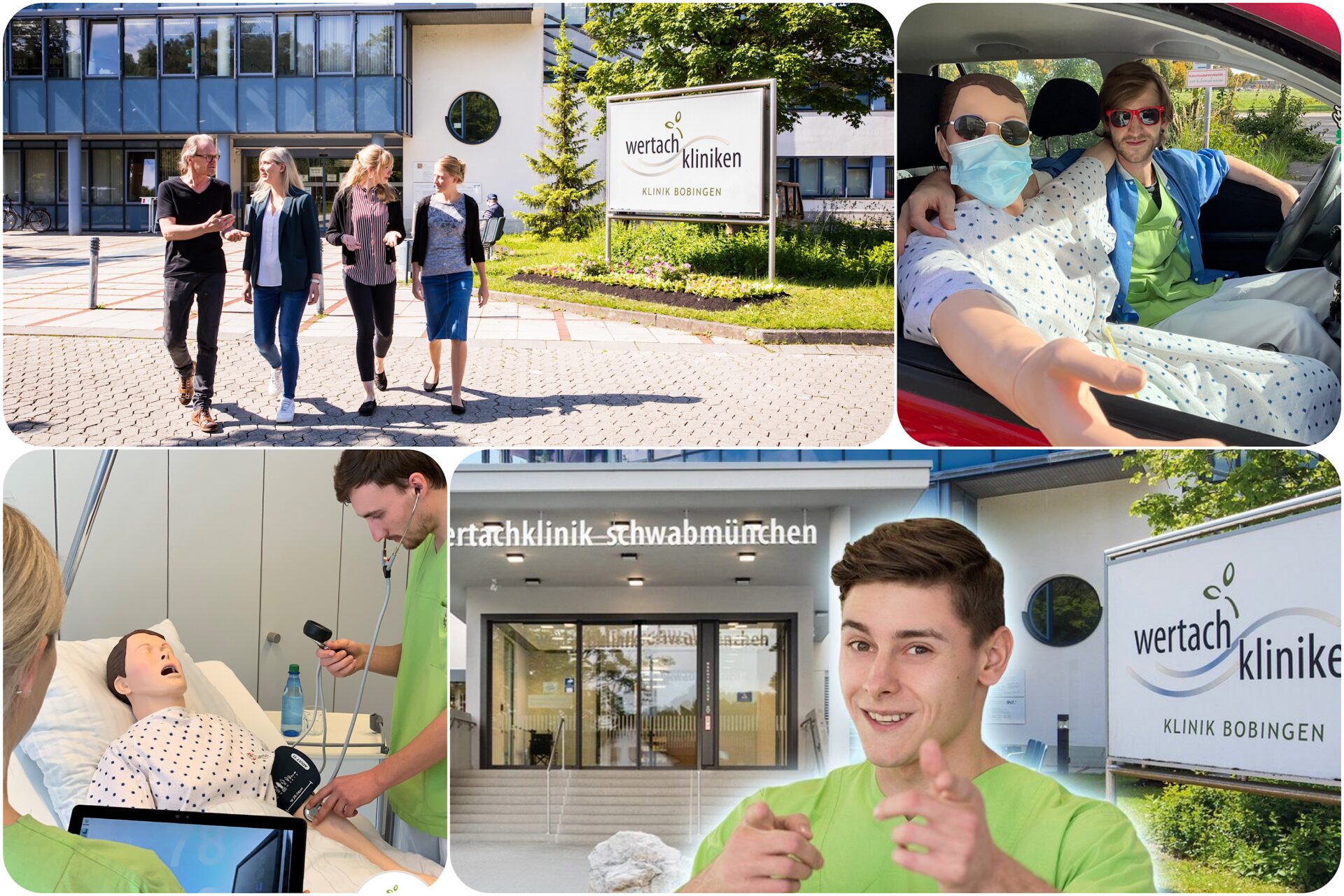
Berufsfachschule für Pflege und Krankenpflegehilfe in den Wertachkliniken Bobingen und Schwabmünchen
Training venues Employers
Hospitals, clinics, care homes
- Entry requirements
Completion of secondary school, completion of vocational training, or two years’ work experience as unskilled staff in the care sector
Therapeutic professions – Speech and language therapist
Speech and language therapists work closely with doctors to develop personalised treatment plans for patients of all ages whose language, speech and swallowing abilities are impaired, for example due to developmental disorders, accidents, breathing and voice problems, or hearing impairments. They carry out treatment using appropriate speech and language therapy techniques, such as articulation and speech comprehension training, or breathing and relaxation exercises. For example, speech and language therapists help stroke patients to regain their ability to communicate or swallow. The treatment of people who have undergone laryngectomy is also part of their remit. In addition, they advise patients and their relatives, as well as teachers in speech therapy and special needs nurseries, on topics relating to speech and language therapy. They may also work in the field of prevention. With the appropriate qualifications, they can also run a speech and language therapy practice or lead a therapy team in a relevant rehabilitation facility.
- Type
Training: Vocational college
- Duration
Full-time: 3 years
- Places of study School
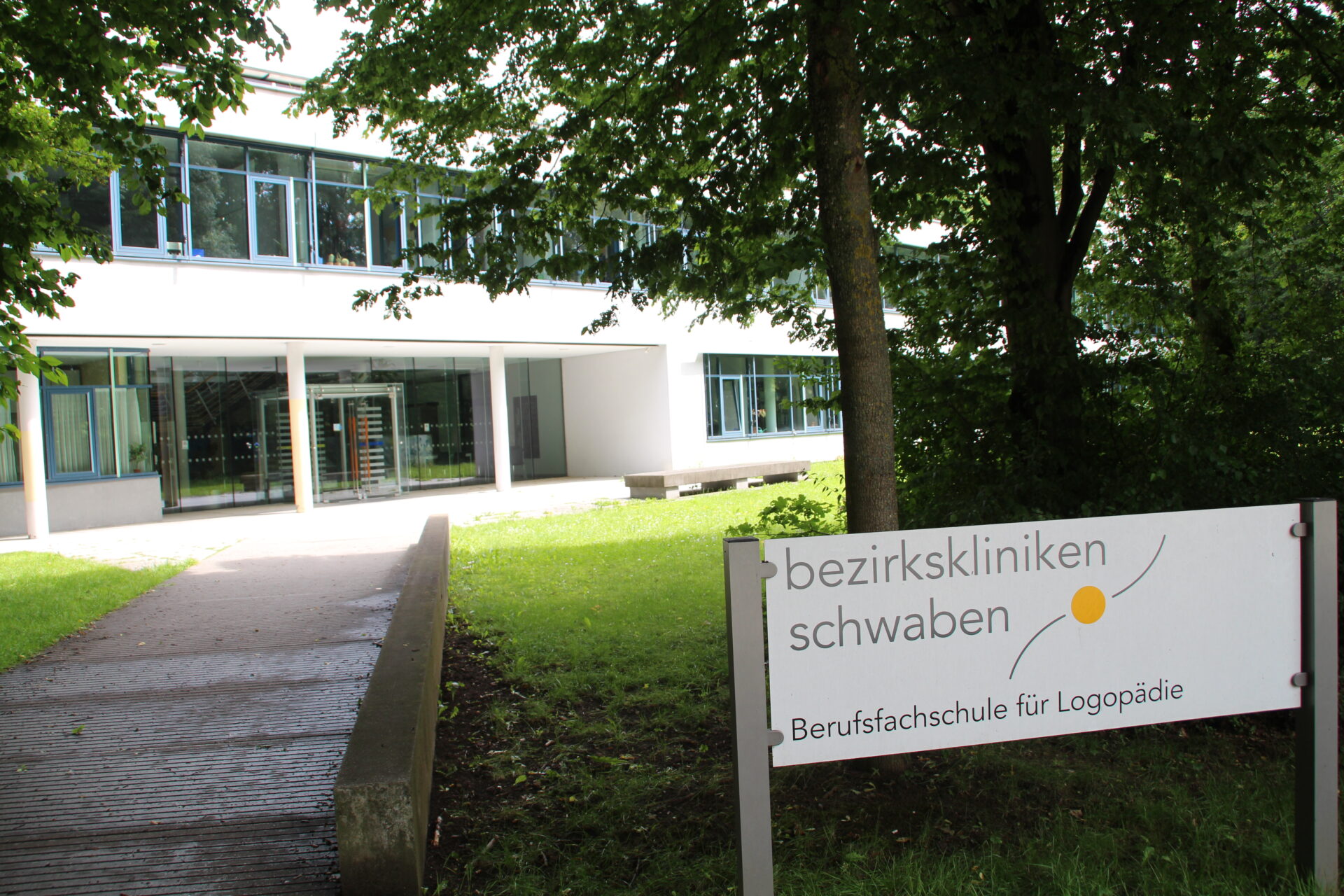
Bezirkskliniken Schwaben – Berufsfachschule für Logopädie
Training venues Employers
Speech and language therapy practice, rehabilitation centre or clinic
- Entry requirements
Secondary school leaving certificate
Dental and medical assistants – Medical Assistant
Medical assistants book appointments for patients, document treatment procedures for patient records, handle the billing of services provided and organise the running of the practice. They apply dressings, prepare injections or take blood samples for laboratory tests. They also advise patients on pre- and post-treatment care, maintain medical instruments and carry out laboratory work.
- Type
Dual training programme
- Duration
Full-time: 3 years
- Training venues School
- Training venues Employer
Training organisation (usually doctors’ surgeries and clinics)
Entry requirements
There are no legal requirements regarding school education; a secondary school leaving certificate is usually required
Medical technology professions – Medical Technologist – Laboratory Analysis
Medical laboratory technologists use their laboratory analyses to support, for example, diagnosis, the early detection of diseases and health risks, health promotion and prevention, or to monitor progress in recovery and the course of treatment. To this end, they examine, for example, blood samples for clotting ability or antibodies, prepare tissue sections, measure the concentration of substances in blood plasma, or test samples for pathogens. Where necessary, they take blood samples or carry out swab tests themselves, inform patients about the tests and guide them through procedures such as blood glucose tests. They carefully document test results and procedures, evaluate the findings and produce laboratory reports which serve as a basis for the attending doctors’ diagnoses. To ensure results are not compromised, they maintain the highest standards of cleanliness and hygiene. They sterilise their equipment and instruments, regularly check that laboratory apparatus is functioning correctly and ensure that maintenance schedules are adhered to.
- Type
Training at a vocational college
- Duration
Full-time: 3 years
- Learning venues School
- Learning venues Employer
Hospital or outpatient facility
- Entry requirements
Secondary school leaving certificate
Paramedic – Paramedic
In medical emergencies, paramedics assess the condition of people who are ill, injured or in need of assistance, decide whether a doctor needs to be called, and arrange for this if necessary. Until the doctor arrives or the patient is transported, they provide initial medical care and, where necessary, carry out immediate life-saving measures. They ensure that patients are fit for transport and look after them during the journey to their destination (e.g. to hospital). They monitor and maintain the patients’ vital signs.
After handing the patients over for further inpatient treatment, paramedics restore their vehicles to operational readiness, clean and disinfect the emergency equipment, and draw up transport records, mission reports and emergency logs. When working in an office role at an ambulance station, an ambulance control centre or an integrated control centre for the fire service and ambulance service, they answer emergency calls and coordinate operations.
- Type
Training at a vocational college
- Duration
Full-time: 3 years
- Learning venues School
Berufsfachschule für Notfallsanitäter
- Learning venues Employer
Training ambulance station and hospital
- Entry requirements
Secondary school leaving certificate
Medical support roles – Surgical Assistant
Surgical technicians are involved in the preparation and performance of surgical procedures. Firstly, they prepare patients for surgery and position them correctly for the procedure. During the operation, they assist the surgeons by handing them the necessary instruments and materials. They also monitor patients’ breathing and circulation so that they can intervene quickly in an emergency. Surgical technicians share responsibility for hygiene in the operating theatre; for example, they maintain the technical equipment and sterilise the instruments. In addition, they document the procedures and, where necessary, manage the stock and procurement of surgical supplies.
- Type
Training at a vocational college
- Duration
Full-time: 3 years
- Learning venues School
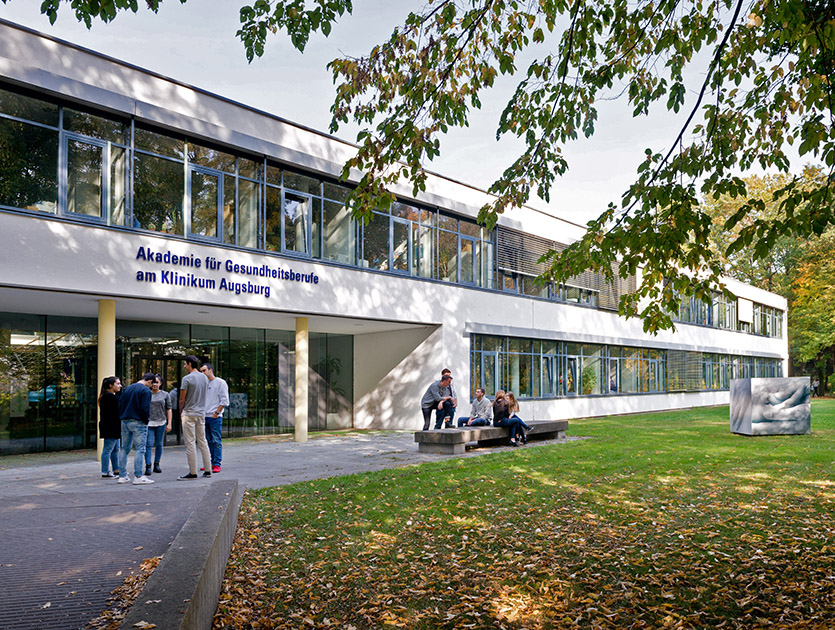
Akademie für Gesundheitsberufe an der Uniklinik Augsburg
Learning venues Employer
Hospitals or outpatient facilities
Entry requirements
Secondary school leaving certificate
Care – Registered Nurse
Registered nurses provide care and support to people of all ages in the fields of general nursing, paediatric nursing and geriatric nursing. In basic care, they help people in need of assistance to get into bed and support them with eating and personal hygiene. In community care, registered nurses also work alongside family members and train them, for example, in care techniques. In consultation with the treating doctors, they treat wounds, for example, and administer infusions, take blood samples and perform punctures. They also assist with examinations, administer medically prescribed medication or injections to patients and prepare them for surgical procedures. Furthermore, they undertake organisational and administrative tasks such as assessing care needs and planning, coordinating and documenting care measures. They are also involved in patient admission, quality assurance and the management of the medicines stock.
- Type
Training
- Duration
Full-time: 3 years
- Places of study School
- Places of learning Employers
Hospitals, inpatient and outpatient care facilities
- Entry requirements
Secondary school leaving certificate or a middle school leaving certificate in conjunction with successfully completed vocational training, e.g. in healthcare, nursing or care for the elderly.
Pharmaceutical professions – Pharmaceutical Technician
Pharmaceutical technical assistants dispense prescription medicines to customers in accordance with the prescription, under the supervision of a pharmacist, and sell over-the-counter medicines and other standard pharmacy products. In doing so, they explain how a product works and how to use it, and provide information on possible side effects and storage requirements. Depending on their professional experience, pharmaceutical technical assistants may also carry out certain tasks without the supervision of a pharmacist. Furthermore, they assist, for example, in the preparation of ointments and solutions, check the substances against the specifications in the pharmacopoeia and measure them out precisely. In addition, they carry out simple chemical and physical analyses of medicines or measure, for example, customers’ cholesterol, urine or blood levels. They monitor stock levels and organise orders. They also carry out the legally required spot checks and stock audits, and record the dispensing and stock levels of poisons and narcotics. They also compile information for special advisory campaigns, for example on the subject of allergies, and assist with events.
- Type
Dual training programme
- Duration
Full-time: 2.5 years (including 6 months of practical training)
- Place of study School
Berufsfachschule für pharmazeutisch-technische Assistenten
- Place of study Employer
Pharmacy
- Entry requirements
Secondary School Leaving Certificate
Therapeutic professions – Physiotherapist
Physiotherapists help patients to maintain, restore and improve their mobility and other physical functions. They offer, for example, muscle and coordination training programmes, particularly for people whose mobility is limited due to age, illness or accident. They also work with athletes, both at a recreational level and in a professional context. Based on a doctor’s diagnosis and their own observations, they plan the course of treatment. They carry out targeted individual and group therapy sessions with patients, such as exercises using equipment, treatments including respiratory therapy, massage, electrotherapy, and heat or hydrotherapy. In doing so, physiotherapists advise their patients on how the therapies work and on suitable aids, motivate them to be active and persevere, and guide them in carrying out physiotherapy exercises independently.
- Type
Training at a vocational college
- Duration
Full-time: 3 years
- Learning venues School
bfz Schulen für Physio- und Ergotherapie
- Learning venues Employer
Hospital
- Entry requirements
Secondary school leaving certificate
Dental and medical assistants – Dental Assistant
Dental assistants organise the running of the practice by scheduling treatment appointments and internal procedures, and by ensuring that rooms, equipment and instruments are available for use. They assist with examinations and treatments and, depending on their qualifications, take on more advanced tasks in areas such as preventive care, prosthetic dentistry and orthodontic assistance. On the dentist’s instructions, they prepare fillings or impression materials for dental impressions and take X-rays. They document treatment procedures and record services provided for billing purposes. Dental assistants look after patients before, during and after treatment, explain preventive measures and provide guidance on oral hygiene. They handle correspondence with health insurance companies and laboratories, check incoming payments and manage the practice’s debt collection process.
- Type
Dual training
- Duration
Full-time: 3 years
- Places of learning School
- Training locations Employer
Training practices, usually dental practices – including orthodontic, oral and maxillofacial surgery practices – or dental clinics
- Entry requirements
There are no legal requirements regarding school education; in most cases, a secondary school leaving certificate is required