
Work. Settle in. Get started. Aux connects talent worldwide

You are an essential part of Aux’s innovative spirit, no matter where you come from. A thriving economy, open networks and a warm community make it easy to settle in. Here you’ll find career opportunities, a high quality of life and an environment where you don’t just work, but truly feel at home. Welcome to your new future!

New Skilled Workers Immigration Act

The new Skilled Workers Immigration Act is designed to make it easier for foreign skilled workers with vocational training or practical work experience to come to Germany. The Act further develops the skilled workers immigration framework and removes existing barriers. It consists of several parts and came into force in stages between November 2023 and June 2024.

Contacts and organisations in the region (in German)

The new Skilled Workers Immigration Act allows immigration on three different grounds:

  • Qualifications: Anyone with a qualification will in future be able to take up any skilled occupation.
  • Experience: Anyone with at least two years’ professional experience and a vocational qualification recognised by the state in their country of origin may immigrate as a worker. In future, the vocational qualification will no longer need to be recognised in Germany – this means less bureaucracy and shorter procedures.
  • Potential: Another new feature is the so-called ‘opportunity card’ for job seekers, which is based on a points system. The selection criteria include qualifications, knowledge of German and English, professional experience, links to Germany, age and accompanying partners or spouses.

More detailed and comprehensive information on the various schemes is available on the German government’s website (in German) and the Make-it-in-Germany portal.

An overview provided by the Federal Employment Agency (in German) lists the different routes of access, along with the relevant eligibility criteria and legal basis.

Practical example: Foreign trainees
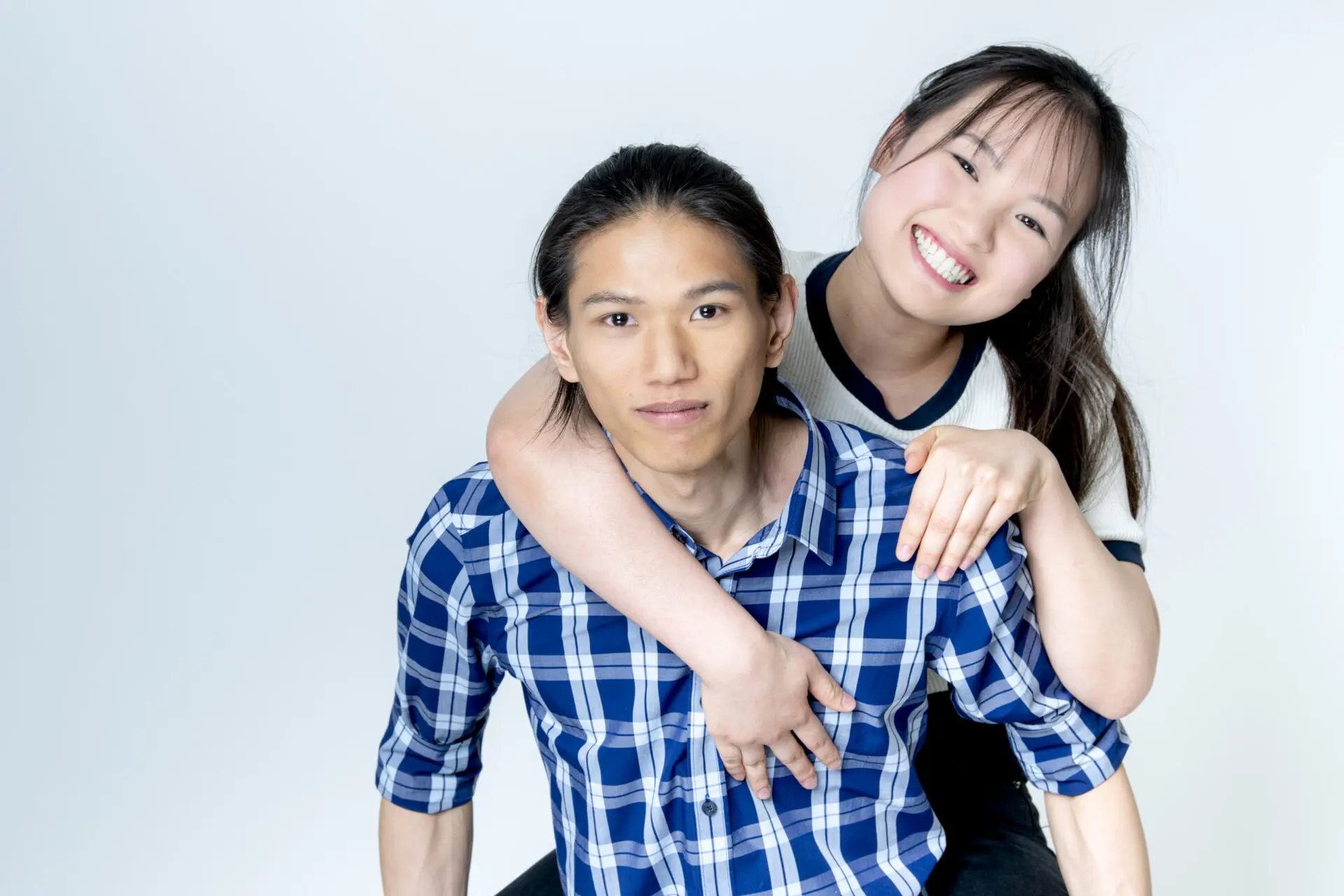
Foreign trainees in the care sector

Foreign skilled workers can present an opportunity for companies in the healthcare sector. Young people in particular who come to Germany for training can complete their qualifications here and then enter the profession straight away. However, recruitment and training must be well prepared. Ulrike Werlitz from the Haus Gabriel retirement home has already gained a great deal of experience in training foreign care workers.

Getting to know each other

The first online interviews begin several months before the training starts and allow both sides to get to know each other in detail. This helps determine whether the applicant is a good fit for the training organisation. If candidates demonstrate commitment and patience throughout this entire process, this has a positive impact on their chances of securing a position at the Haus Gabriel retirement home. Following the interviews, the necessary documents – such as a CV, a copy of their passport and a cover letter – are sent to the training centre.
Foreign skilled workers can present an opportunity for companies in the healthcare sector. Young people in particular who come to Germany for training can complete their qualifications here and then enter the profession straight away. However, recruitment and training must be well prepared. Ulrike Werlitz from the Haus Gabriel retirement home has already gained a great deal of experience in training foreign care workers.

Getting to know each other

The first online interviews begin several months before the training starts and allow both sides to get to know each other in detail. This helps determine whether the applicant is a good fit for the training organisation. If candidates demonstrate commitment and patience throughout this entire process, this has a positive impact on their chances of securing a position at the Haus Gabriel retirement home. Following the interviews, the necessary documents – such as a CV, a copy of their passport and a cover letter – are sent to the training centre.

Language course and vocational training

To prepare for their vocational training in Germany, the young people arrive a few weeks before the training begins, if possible. They then undertake a language course, which can be applied for alongside the preliminary assessment. In addition to these 20 hours of lessons per week, the future trainees already work part-time at Haus Gabriel and can stay in the staff accommodation free of charge. “It’s a win-win situation for both sides,” says Ulrike Werlitz, “they can continue learning the language and get to know the facility and the day-to-day routine of care work even before their training begins. What’s more, their earnings provide them with a little pocket money.”

Support and personal contribution

Trainees at the Haus Gabriel retirement home must complete a few steps on their own beforehand. These include having their qualifications recognised and arranging a place at a language school. The costs of certifying and translating their qualifications, as well as the cost of the flight, are borne by the trainees themselves. This is where the trainee’s commitment and determination really shine through, says Ulrike Werlitz. The Seniorendomizil Haus Gabriel then takes care of the rest, namely the costs of accommodation prior to the training and the language course. Colleagues then help the newly arrived trainees to find their feet in everyday life in Germany, make contacts, deal with administrative procedures and act as points of contact should any problems arise. Werlitz advises other training organisations to persevere with patience and commitment in order to successfully achieve their goals.

Once a care home, now a grand hotel

In 2011, three artists were looking for new spaces. They came across the former Diakonie care home on Springergässchen, which had stood empty for several years. At the same time, the Swabian regional government wanted to convert the building into accommodation for asylum seekers. This inspired the artists and their idea was born: to bring all these interests together under one roof. The bureaucratic processes dragged on for two years. Around 500 people contributed a total of over 100,000 hours of unpaid labour to the refurbishment. In July 2013, the first asylum-seeking residents moved in. A few months later, the hotel began operating for travellers.

Today, the Diakonie rents out the six-storey building to two parties: to the Government of Swabia, which runs the “Springergässchen 5 shared accommodation”, and to the non-profit association “Grandhotel Cosmopolis e.V.”, which rents the rest of the building. The project is financially supported by revenue from hotel and catering operations, donations, contributions in kind and, in part, grants and funding.

Hotel guests “with and without asylum” – A shared space

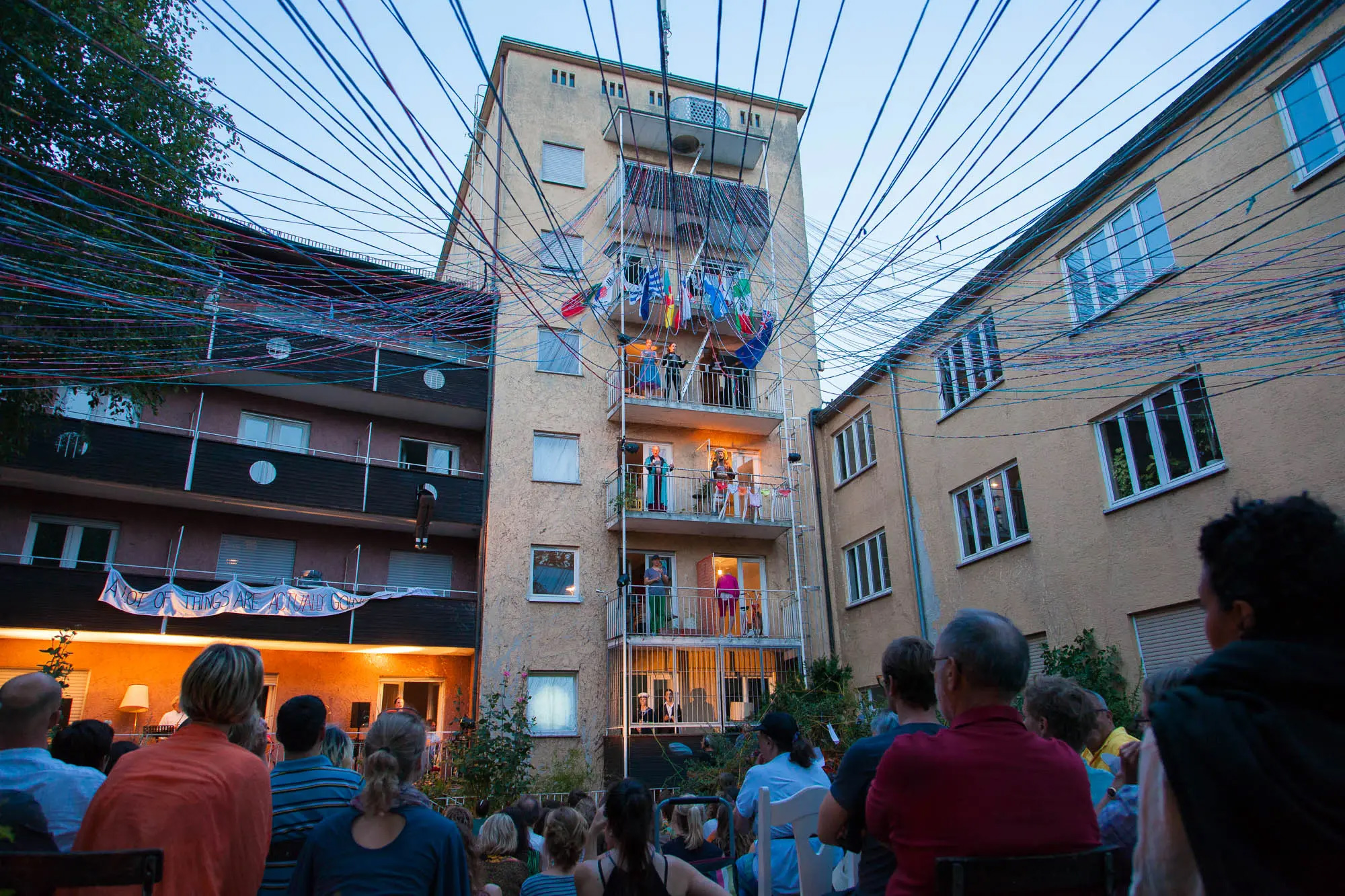
Many describe what is happening at the Grandhotel Cosmopolis as a ‘social sculpture’, or even a total work of art on a societal scale. For it can only continue to exist through participation. Without a doubt – the concept is unique in Germany, just like the diversity of the people taking part: 60 hotel guests ‘seeking asylum’ find a temporary home at the Grandhotel. Among them are families, unaccompanied minors, women and men of various backgrounds. During their stay, they help out with hotel operations as best they can, for example in the kitchen.

Individually designed hotel rooms offer accommodation to guests ‘without asylum’. They come to Augsburg as travellers, businesspeople or students. They too can lend a hand at any time. Last but not least, there are artists and cultural practitioners who work on their own projects in the studios and enrich the hotel’s daily routine with creative ideas. Jobs such as room cleaning, teaching German or serving coffee are carried out by volunteers. They support the refugees with applications or visits to the authorities; they fight for the future of individual residents who are facing deportation. For residents of the surrounding neighbourhood, the Grandhotel is also a meeting place.

Art as a unifying force

Art has often proved to be one of the hotel’s strengths. Since 2012, the Grandhotel has taken part in Augsburg’s Great Peace Festival (in German) every year. The team collaborates with the Augsburg City Theatre, organising concerts, exhibitions and workshops such as the ‘intercultural storytelling workshop’, where participants create their own works. Another major project was the “Grandhotel Cosmopolis Peace Conference” in 2015. In short: the Grandhotel is now an integral part of the city’s cultural life.

Art has often proved to be one of the hotel’s strengths. Since 2012, the Grandhotel has taken part in Augsburg’s Great Peace Festival (in German) every year. The team collaborates with the Augsburg City Theatre, organising concerts, exhibitions and workshops such as the ‘intercultural storytelling workshop’, where participants create their own works. Another major project was the “Grandhotel Cosmopolis Peace Conference” in 2015. In short: the Grandhotel is now an integral part of the city’s cultural life.

The Grandhotel's website (in German)