
Success story: Top-level research in Aux Ready for the future – world-class research

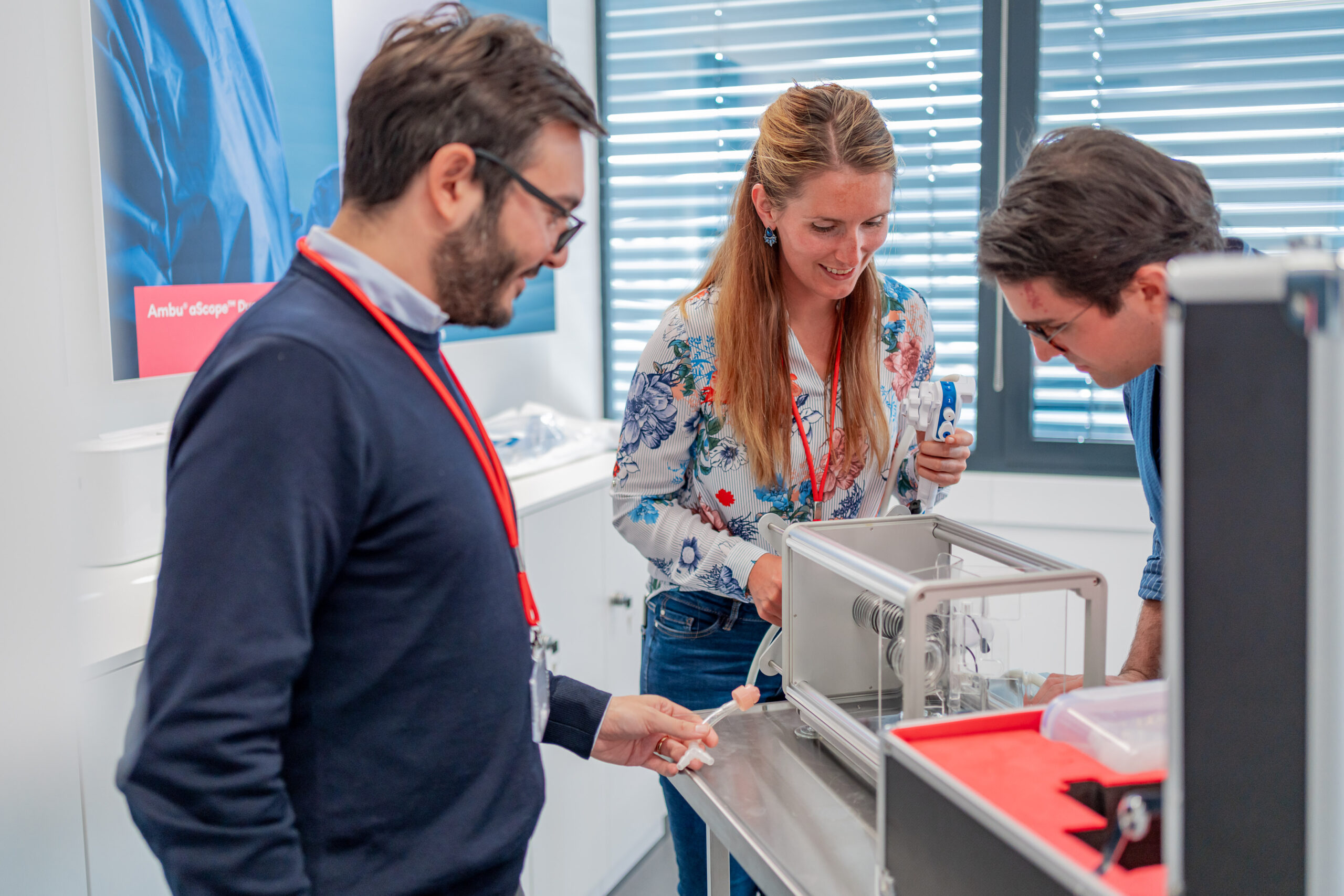
Aux is conducting intensive research into future technologies related to Industry 4.0 – application-oriented and at the highest level. Additive manufacturing, robotics, artificial intelligence and resource efficiency are just some of the areas of expertise being developed here in the region. The numerous research and application centres and institutes located here are drivers of new technologies and contribute to entrepreneurial innovation in Aux.

What it's about

The business location Aux has great potential in application-oriented top-level research, both within and outside the university.

From double-entry bookkeeping to the development of the diesel engine and the first stratospheric flight, groundbreaking innovations have their origins in Aux. And the future looks promising. This centre of knowledge is conducting application-oriented, top-level research into future technologies related to Industry 4.0. Thanks to excellent science and top-class research facilities, the future of technology can be launched here.

Top-level university research on site

Augsburg has been a university city since 1970. The following year, Augsburg University of Applied Sciences was founded. Both universities have been conducting top-level applied research for 50 years.

When it comes to progress in the field of AI, Augsburg's universities are also at the forefront. Both the University of Augsburg and Augsburg University of Applied Sciences have recently established new professorships in the field of AI. These complement the new research expertise of the Faculty of Medicine in the field of medical informatics.

Research with direct practical application 

With the establishment of the Augsburg Innovation Park, applied research institutions have settled in the immediate vicinity of the university campus. These include two Fraunhofer groups and two locations of the German Aerospace Centre (DLR). One focus here is research into greater resource efficiency. The newly built Institute for Material Resource Management (MRM) conducts research into the economical use of resources and develops innovative strategies for the efficient use of materials. This led to the creation of the Green Factory, another institute where the resource-efficient production of tomorrow is being further developed. The Fraunhofer Institute for Casting, Composite and Processing Technology (IGCV) brings together three different scientific fields that conduct interdisciplinary research into production technology. The DLR Centre for Lightweight Production Technology (ZLP), which has been based here for more than 10 years, focuses on digitising and automating the production of lightweight structures for modern aviation. This is achieved not least thanks to its impressive large-scale research facility, the Multifunctional Robot Cell (MFZ). This enables the automated production and quality assurance of fibre-reinforced large components on an industrial scale.

Top-level university research on site

Augsburg has been a university city since 1970. The following year, Augsburg University of Applied Sciences was founded. Both universities have been conducting top-level applied research for 50 years.

When it comes to progress in the field of AI, Augsburg's universities are also at the forefront. Both the University of Augsburg and Augsburg University of Applied Sciences have recently established new professorships in the field of AI. These complement the new research expertise of the Faculty of Medicine in the field of medical informatics.

Research with direct practical application 

With the establishment of the Augsburg Innovation Park, applied research institutions have settled in the immediate vicinity of the university campus. These include two Fraunhofer groups and two locations of the German Aerospace Centre (DLR). One focus here is research into greater resource efficiency. The newly built Institute for Material Resource Management (MRM) conducts research into the economical use of resources and develops innovative strategies for the efficient use of materials. This led to the creation of the Green Factory, another institute where the resource-efficient production of tomorrow is being further developed. The Fraunhofer Institute for Casting, Composite and Processing Technology (IGCV) brings together three different scientific fields that conduct interdisciplinary research into production technology. The DLR Centre for Lightweight Production Technology (ZLP), which has been based here for more than 10 years, focuses on digitising and automating the production of lightweight structures for modern aviation. This is achieved not least thanks to its impressive large-scale research facility, the Multifunctional Robot Cell (MFZ). This enables the automated production and quality assurance of fibre-reinforced large components on an industrial scale.

How Aux is making the future better:

This is where the basis for future technologies related to Industry 4.0 is being developed: in lightweight construction, new materials, robotics, artificial intelligence and resource efficiency.

Special feature for companies:

Thanks to the large number of top research partners in the region, companies here can launch themselves into the technological future.

Exchange between research and industry


The business location Augsburg has numerous experts who are addressing important future issues relating to Industry 4.0. To ensure that this knowledge can bear fruit in practice, the institutions work closely with companies in Aux. This interaction between science and industry is fertile ground for innovation. Bring on the future!

Further links


Augsburg Innovation Park: https://www.augsburg-innovationspark.com/fact/key-facts/

TEA.Network of Transfer Institutions Augsburg: www.tea-transfer.de (in German)

Augsburg Technology Transfer Congress: www.technologietransfer-kongress.de (in German)